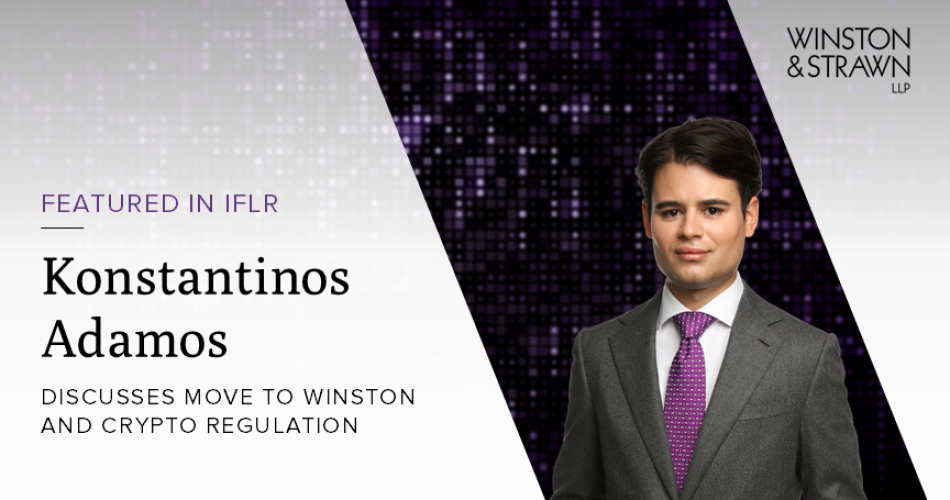
Konstantinos Adamos, former head of cryptoassets legal at Revolut, joined the team at Winston & Strawn as of counsel. He worked for more than five years at Revolut, an international fintech company, where he played a key role in the company’s registration with the United Kingdom’s Financial Conduct Authority (FCA).
Additionally, Adamos collaborated in obtaining the license for cryptoasset operations granted by the Cyprus Securities and Exchange Commission. Currently, the lawyer is based at Winston & Strawn’s London office, but his transfer to the United Arab Emirates (UAE) is planned following the transatlantic merger between Winston & Strawn and Taylor Wessing.
In the United Arab Emirates, Adamos will work directly on developing the regulatory framework for digital assets in the city of Dubai. In this way, he aims to simultaneously serve clients from the United Kingdom and the Gulf region, expanding the firm’s presence in distinct and complex markets.
Regulatory context and impact on the cryptoasset market in the United Kingdom and United Arab Emirates
The United Kingdom plans to implement a new regulatory regime for cryptoassets that will come into effect in October 2027. This initiative foresees including operations with these assets within the scope of the Financial Services and Markets Act 2000, expanding control over the market. Still, the Financial Conduct Authority (FCA) announced that the authorization process for the new regime should open as early as September 2026, which creates a schedule considered aggressive and challenging for companies in the sector.
Meanwhile, in the United Arab Emirates, the regulation of cryptoassets is mainly conducted by the Virtual Assets Regulatory Authority, based in Abu Dhabi. Besides this authority, bodies such as Abu Dhabi Global Markets (ADGM) and the Dubai International Financial Centre (DIFC) also play an important role in overseeing the segment. Overall, the region adopts a detailed regulatory framework that seeks to ensure the security and transparency of the digital asset market.
Konstantinos Adamos highlighted that United Arab Emirates financial institutions have high international standards and are considered very solid. This characteristic, combined with the local normative structure, contributes to Abu Dhabi becoming a strategic center for attracting investments in the financial sector. Thus, the Gulf region positions itself as a relevant hub for operations with cryptoassets and broader digital assets.
On the other hand, the increase in client demand for services related to cryptoassets in the Emirates is largely driven by recent regulatory changes in the United Kingdom and Europe. Thus, the Emirates’ market ends up reflecting the impact of legal reformulations occurring in the Old Continent, which broadens interest in regional alternatives. Consequently, this scenario strengthens the interaction between the regulatory environments of both hubs, impacting the flow of capital and strategies in the financial sector.