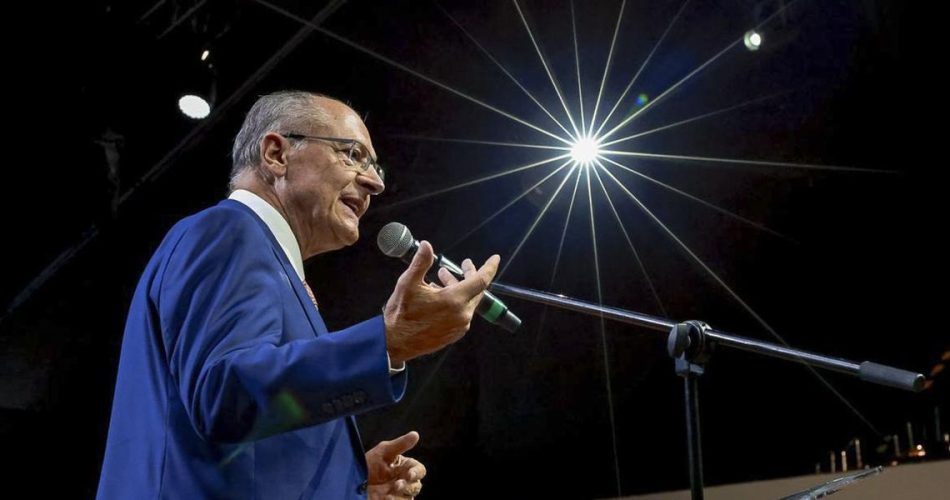
Vice President Geraldo Alckmin stated that a potential second term of President Luiz Inácio Lula da Silva will include fiscal adjustment in the first year. Alckmin detailed that the government is studying primary surplus targets ranging from zero to 0.5% of the Gross Domestic Product (GDP), included in the reelection ticket’s program.
According to the vice president, the current situation of public accounts is quite different from the context experienced in 2020, when Brazil recorded a primary deficit close to 10%. He emphasized that despite the advances made so far, the reorganization of the country’s finances has not yet been sufficient to guarantee medium-term fiscal sustainability.
Alckmin added that the fiscal adjustment will be an integral part of a broader agenda in the government plan to be presented during the electoral campaign. However, he avoided specifying which instruments will be used to achieve fiscal balance, leaving this definition for the beginning of the term.
Furthermore, the vice president highlighted the importance of carrying out the adjustment in the first year of the next government, so that fiscal policy is conducted in an organized manner. He explained that the fiscal issue will be politically addressed during the campaign, while administrative management will be under the government’s responsibility should reelection occur.
Thus, the fiscal planning for Lula’s second term is based on seeking a moderate surplus, with stricter control of expenses and a careful debate about balancing public accounts. The conclusion of the process still depends on the approval of fiscal directions by the economic team and should be detailed as the government advances in formulating the official program.
Economic and Sectoral Policy Assessments
Vice President Geraldo Alckmin considered that the current monetary policy is misaligned given the inflationary pressures the country faces. According to him, recent increases in inflation do not derive from the rise in interest rates, but rather from external factors such as the fluctuation of the dollar, drought, and rising oil prices.
Alckmin reported that the dollar fluctuated between R$ 6.30 and R$ 5.15, directly impacting costs in the domestic market. The government monitors daily the effect of the escalation of the war in the Middle East on oil prices, since this factor significantly influences the price of diesel, which in turn raises the costs of transportation and food.
Additionally, the vice president did not rule out the possibility of increasing the ethanol share in the gasoline blend, which currently corresponds to 30%. He highlighted that Brazil has a fleet with 85% flexible-fuel vehicles, allowing consumers the freedom to choose the fuel they prefer.
Another point raised by Alckmin was the country’s dependence on potassium, a raw material essential for fertilizers, whose import corresponds to 95% of national consumption. This vulnerability compromises the agro-industrial chain and may affect agricultural productivity in the medium term.
In the tax area, the vice president advocated maintaining taxation on e-commerce. In this way, they seek to ensure fair competition between digital businesses and physical retailers, avoiding imbalances in the market.
Finally, Alckmin highlighted progress in negotiations with Congress for the approval of incentives aimed at the installation of data centers in Brazil. The goal is to attract investments in technological infrastructure, which can strengthen the country’s competitiveness in the digital sector, as reported by official sources from the National Congress.