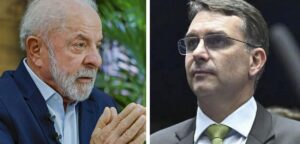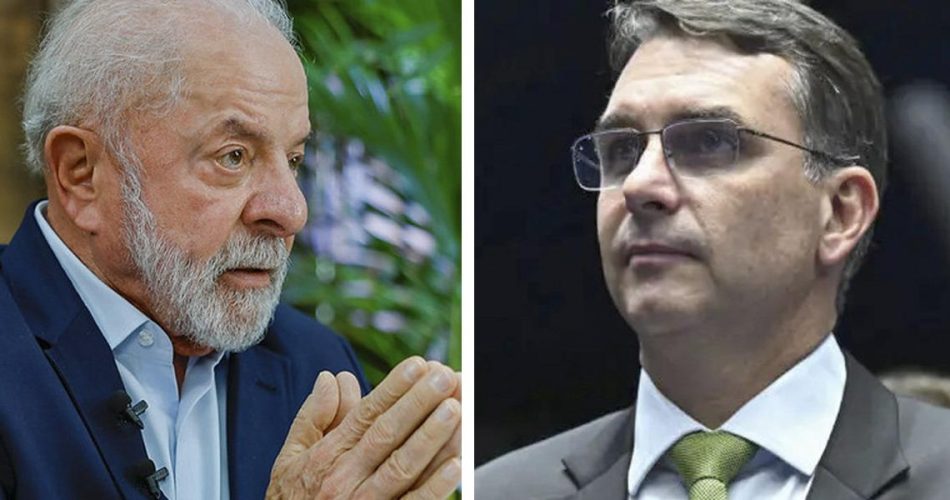
The Workers’ Party (PT) published a political resolution on January 17, 2023, highlighting the sharp polarization in the 2026 presidential elections. In the document, the party supports the re-election of President Luiz Inácio Lula da Silva and points to Senator Flávio Bolsonaro (PL-RJ) as its main adversary, setting up a clash between antagonistic political projects.
The PT resolution states that the election will be decisive in defining the country’s path, involving strategic choices about economic development, democracy, and public policies. The party emphasizes positive economic indicators, such as the Gross Domestic Product (GDP) growth above 3% registered in 2022, the reduction of unemployment rates, and the increase in Brazilian workers’ income.
Furthermore, the text points out that Brazil would have again left the Hunger Map, attributing these achievements to Lula’s administration, which is also highlighted for strengthening the Unified Health System (SUS) and increasing investments in science and technology. In contrast, the PT criticizes previous governments, especially the administration of former President Jair Bolsonaro, for practices that undermined labor conditions and the continuous rise in fuel prices.
The resolution also advocates the need to reduce the Selic rate to ease household debt, in addition to mentioning the anti-democratic acts that occurred on January 8 as part of the current political context. The document also highlights advances of the Lula government in environmental enforcement and deforestation reduction, central elements in its communication strategy.
The PT proposes the creation of the National Care System and the reduction of the workday as important measures of its social agenda. On the other hand, party members reaffirm strong criticisms of Flávio Bolsonaro’s pre-candidacy, emphasizing ongoing investigations and his discourse considered authoritarian.
Finally, the Workers’ Party demands the formation of a majority parliamentary base in Congress to ensure full governability in the next term. The document concludes that the 2026 elections represent a direct confrontation between distinct and opposing country models, with relevant impact on the political and economic future of Brazil.
Economic and political controversies related to Banco Master
Banco Master operated during Jair Bolsonaro’s government under suspicions of fraudulent practices and corruption, but the Central Bank (BC), led by Roberto Campos Neto, did not take interventions to curb irregularities. Furthermore, Paulo Sérgio Neves de Souza, a pilot at the BC, simultaneously acted as an informal consultant for the founder of the financial institution, Daniel Vorcaro. These connections unsettled authorities and opposition sectors.
Vorcaro, who made donations to Bolsonaro’s campaign and also to then Minister Tarcísio de Freitas, maintained close political relations. Deputy Nikolas Ferreira, an ally of the government, repeatedly used the businessman’s private jet, reinforcing the articulation between the Bolsonaro political circle and Banco Master. Consequently, doubts grow about the influence of these links on administrative decisions.
On the other hand, governors aligned with the Bolsonaro movement acquired so-called toxic financial securities using public resources, directly related to the bank. The Governor of the Federal District, Ibaneis Rocha, even attempted maneuvers to rescue Banco Master with state funds, which generated criticism for potential misappropriation of purpose. These actions intensified tension over the political use of public money in favor of banking sectors.
Overall, the Workers’ Party (PT) uses the case to denounce the confluence between political operators, financial institutions, and the State. The party presents the episode as illustrative of a neoliberal project that favors private interests to the detriment of popular needs. Thus, the scandal gains repercussion in the electoral disputes scheduled for 2026.
Finally, the progress of investigations and accountability of those involved still depend on decisions by regulatory and judicial bodies. The inquiry into the role of the Central Bank and public authorities in the Banco Master case remains in the spotlight, especially ahead of the next elections and the impacts on the credibility of economic institutions in Brazil.