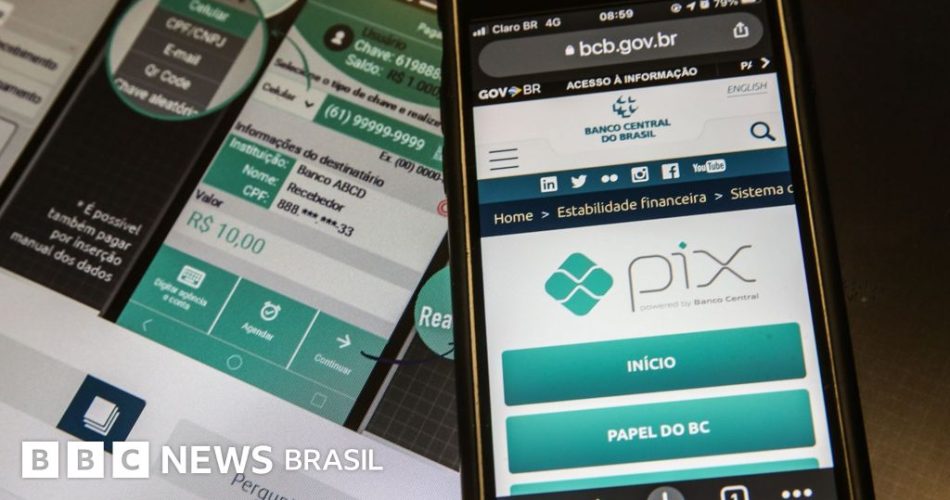
The National Trade Estimate Report 2026, released on March 31, mentioned Pix on three occasions throughout more than 500 pages, highlighting the United States’ attention on the Brazilian payment system. Since July 2023, the Office of the United States Trade Representative (USTR) has initiated an investigation to assess whether Pix constitutes an unfair trade practice, based on Section 301 of the Trade Act of 1974.
Operated and regulated by the Central Bank of Brazil, Pix requires mandatory use by financial institutions holding more than 500 thousand accounts. Furthermore, the Brazilian public system alters the competitive balance for American companies such as Visa and Mastercard by reducing dependence on private networks and concentrating national jurisdictional control. In this context, the USTR report cites similar practices in countries such as India, Thailand, and Pakistan, highlighting the possible disadvantage to U.S. companies.
Among the measures that the United States may adopt are the suspension of trade benefits, import restrictions, tariff impositions, and even the withdrawal of Brazil from the U.S. Generalized System of Preferences (GSP). However, the investigation is still ongoing and has no expected conclusion date, even with increased bilateral dialogue since September 2023, following a meeting between representatives of the two countries at the United Nations (UN).
For its part, the Brazilian government, through President Luiz Inácio Lula da Silva, reaffirmed that Pix is a national platform and will not be changed under external pressure. Similarly, Colombian President Gustavo Petro declared explicit support for the model adopted by Brazil on April 6, 2024, reinforcing the regional impact of the initiative.
Besides Pix, the USTR has also been investigating other trade issues, such as tariffs applied on American ethanol in Brazil and topics related to illegal deforestation. In February 2024, the U.S. Supreme Court overturned tariffs imposed under the IEEPA (International Emergency Economic Powers Act), raising the importance of Section 301 as an alternative for imposing tariff measures against trade partners.
Thus, the current investigation into Pix may indicate a broader U.S. trade retaliation movement rather than dealing only with specific technical aspects of the Brazilian system. American authorities are assessing whether Pix’s public infrastructure constitutes a competitive disadvantage for private U.S. actors, influencing possible future actions.
The conclusion of the process still depends on the USTR’s analysis, which examines the impacts and compliance of Pix with international trade rules. In the coming weeks, continued dialogue between Brazil and the United States is expected, while regulatory bodies monitor the negotiations and any measures to be implemented.