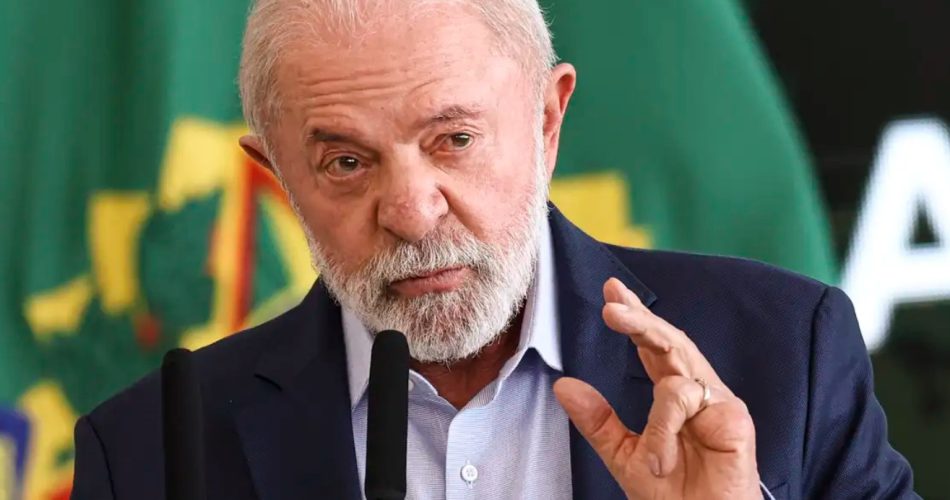
At the meeting on October 19, 2023, the Monetary Policy Committee (Copom) chose to reduce the basic interest rate by 0.25 percentage points, to 13.75% per year. The decision caused an immediate reaction from President Luiz Inácio Lula da Silva, who expressed dissatisfaction for expecting a larger cut, of at least 0.5 percentage points.
During an event in São Paulo, the head of the Executive criticized the Central Bank’s explanation for maintaining the high rate, based on the impact of the international war on the economy. Lula emphasized that his government worked to foster growth, create jobs, and raise wages throughout 2023, despite global adversities.
Furthermore, the president highlighted the role of the Minister of Finance, Fernando Haddad, when celebrating the approval of the Brazilian tax reform, a topic awaited for four decades. This achievement represented an important milestone in the country’s fiscal scenario and was mentioned as part of the recent advances promoted.
On the same day as the Selic rate reduction, there were also changes in the leadership of the Ministry of Finance, with the appointment of new heads for the department. Fernando Haddad, who remains in the ministry, also announced his intention to run for the pre-candidacy for the governorship of the state of São Paulo in 2023, signaling political movements parallel to economic decisions.
These developments show the simultaneous movement between economic adjustments and political reconfigurations in the federal government. The interest rate reduction was modest compared to presidential expectations, while the minister’s political actions highlight the complexity of the national political and economic environment.
Economic Context and International Scenario
The European Central Bank chose to leave the basic interest rate unchanged amid doubts about the evolution of inflation and the slowdown in growth caused by the Middle East conflict. This decision reflects the risks associated with global instability, which still affect the economic performance of the eurozone.
Likewise, the Bank of England decided to maintain the basic interest rate level, taking into account persistent external risks and inflation that remains above the established target. These measures highlight the difficulties faced by monetary authorities to balance price stability with growth.
In Brazil, the National Electric Energy Agency (Aneel) forecasts an average increase of 8% in electricity tariffs. The adjustment is linked to the growth of the Energy Development Account (CDE), which has pressured sector costs and directly impacts families and companies.
On the other hand, specialists point to a possible definition of the dates for the start of delivery and download of the Income Tax declaration to the Federal Revenue, although no official calendar yet exists. This generates expectations among taxpayers and accountants, who await guidelines for the upcoming declaration season.
Regarding payment methods, consumers reported instability in the Pix system and banking apps, with a significant peak of complaints on October 19, 2023. These episodes of technical failure have affected users’ confidence in digital financial services.
Additionally, a review of the most recent data revealed a drop in weekly requests, in a scenario marked by uncertainty about energy tariffs and labor market conditions. This movement signals caution by economic agents in the face of still undefined variables.
Bruno Samora, an executive at Matera, highlighted that the new rules for Value Management Service Providers (PSAVs) help increase investor confidence, as well as boost the use of stablecoins in the national market. In this way, specific regulations have the potential to accelerate the adoption of financial technologies.
Finally, Jerome Powell, president of the Federal Reserve (Fed), emphasized the impact of energy prices on American inflation and reiterated the central bank’s commitment to achieving the 2% inflation target. Despite global uncertainties, he reinforced that monetary policy will continue to be adjusted as necessary to control price indexes.