The United States Federal Reserve (Fed) maintained the benchmark interest rate between 3.50% and 3.75% at the meeting held on March 12, 2024. This decision occurred amid an economic outlook marked by persistent inflation and uncertainties related to international conflicts.
During the month of March, the US dollar appreciated by more than 2%, increasing its strength against other currencies. According to a report from the Swiss bank Union Bancaire Privée, this dollar appreciation has exerted additional pressure on global markets, making it difficult for emerging economies to recover and influencing commodity prices.
On the other hand, the postponement of the Fed’s interest rate cuts negatively impacted investor sentiment. Many expected an earlier cut, but this more cautious stance by the US central bank reflects concerns about the sustainability of economic growth.
Furthermore, official projections indicate that inflation is expected to remain elevated for some time, which justifies the persistence of restrictive monetary policy. Thus, economic policymakers opt for a firm stance to attempt to contain inflationary pressures, even amid the global volatility scenario.
However, this combination of factors maintains an uncertain environment for the international financial market. Fed authorities emphasized that upcoming decisions will depend on the evolution of economic data and geopolitical risks, without ruling out the possibility of new adjustments to interest rates.
Impacts of Oil Prices and Exchange Rate Appreciation on Market Expectations
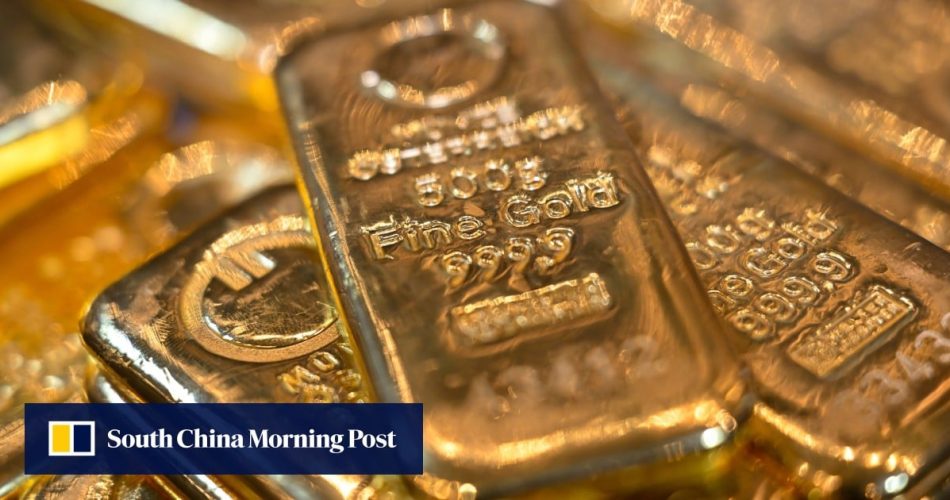
Rising oil prices tend to pressure global inflation, which in turn weakens various fiat currencies against the dollar. This dynamic creates a favorable environment for real assets such as gold, which traditionally appreciate during periods of high inflation and economic tensions.
However, in March 2024, the expected pattern changed due to the postponement of interest rate cuts by the Federal Reserve (Fed). Thus, the typical stimulus for gold appreciation slowed down, as restrictive monetary policy helps keep the dollar strong and limits gains in assets considered inflation hedges.
On the other hand, the US dollar itself has its quotation elevated precisely because it functions as a safe-haven asset in times of economic uncertainty and financial market volatility. Consequently, the appreciation of the American currency impacts not only the internal price of gold but also the risk perception of international investors.
Thus, the movements of oil and the dollar interact in a complex way with market expectations, significantly influencing commodity prices and the behavior of global currencies. Still, the Fed’s monetary policy remains a crucial factor in determining market directions in the upcoming months.
Besides the immediate effects, exchange rate volatility and oil prices continue to be closely monitored by regulatory bodies and investors, who adjust their strategies as international economic decisions unfold.
The expectation is that market conditions will be impacted by upcoming Fed announcements and the evolution of oil prices, monitored by authorities such as the Federal Reserve and the United States Department of Energy, which directly influence global economic stability.